24+3 (27) Hour Brined Roaster
Chicken Roaster – one of the most versatile mammals to prepare for the plate but can be a challenge to keep juicy while making the skin crispy
You can cut it up into pieces and lemon pepper or BBQ it. Buffalo chicken wings are popular as is chicken soup, cook it on a beer can (beer can chicken), fry it, rotisserie and countless other ways it can be prepared.
Anyone can chuck a chicken into the oven after preheat and wait a couple hours from a finished bird. My preferred way to cook chicken is on a grill rotisserie but if you don’t have one, there is a solution that will help you churn out a masterpiece with a lot of waiting and little prep.
I offer up a few tricks that when combined,, make the juciest chicken with lightly browned crispy skin that everyone loves.
This recipe is time consuming but not complicated and should serve from 4-6 adults.
There are 3 key elements that must be done to maintain a balance of moisture and crispy that work well for their respective purpose but when combined take much of the guesswork out of the dish.
Brining, drying and slow cooking are the keys to create a dinner that could easily replace your thanksgiving turkey in November.
Brining:
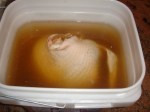
You can also add seasonings now if you wish to penetrate into the birds flesh
If you haven’t ever brined a bird, you don’t know what you are missing. Brining adds salt that forces the chicken to hold moisture, a lot of moisture. By itself it can create a super juicy and tender dinner but typically can yield rubbery skin that isn’t as appealing to the palate is hot crispy goodness encasing your chicken (or turkey, game hen etc). In my world, all game birds should be brined to add moisture due to their inherent lack of fat.
Drying:
There are a few methods to create crispy skin. Cranking up the heat in the oven is one of them but can result in a dried out bird. The chicken breast doesn’t have a bone in it (not really to speak of) and it is white meat which has less fat in it versus the thighs and drumsticks so it is harder to keep moist. To get it all working to the same juicy doneness, moisture and heat control are paramount.
I use the simple fridge to dry out the skin of the bird. It works wonders and requires no work other than waiting. Your refrigerator is a dry environment (inherent in design of refrigeration) and will dry the outer part of the fowl out while keeping the inside nice and juicy. Putting butter and or oil on the skin (or cooking damp skin birds) won;t result in crisp but will give you a rubbery piece that will come off your drumstick on the first bite. Moisture is your enemy here. You want the juices inside the bird, not on \ in the skin.
Slow Cooking:
Slow and low is the tempo for a perfect balance. I will raise the temp of the bird once it is 90-95% of 165 degrees F (internal temp) to lightly brown the chicken at the end of the roast.
Now let’s get down to it
Measurements and timing are based on a 6 lb Roaster.
Brining process:
10 Qt vessel (or 3 gallon food safe bag). (You can try to get away with an 8 or 12 container but will need to adjust the measurements accordingly)
2 gal water
1.5 cups sugar (white or brown
1 .5 cup Honey and or a combo of Maple syrup
2 cups Salt (Kosher or sea) if using table salt – reduce the salt to 1.5 cups because table salt is loaded with iodine and can impart a metallic tinny flavor)
Mix the salt, honey\syrup and sugar into the vessel containing water and bring it to a boil then cool it on the counter. Place in fridge and wait for the water temp to drop to ambient fridge temp. This should take a few hours. Then add the bird and wait 18 hours.
While you are doing this (or while waiting for the Drying (next step) to commence, make your rub.
Rub recipe: (DO NOT USE ANY SALT)
This is up to you really and your taste but remember that adding salt to a brined bird will probably make it too salty.
I use:
1 Tbps Paprika
1.5 Tbps Onion powder
Black pepper (to taste – usually 1 tsp)
Dried pepper flakes (to taste- I use 1 Tbsp
Thyme (1\2 tsp)
1 tsp Garlic powder
You can either store the rub until the bird is dried or put it on when you drain the brine.
Drying process:
Drain the bird in the sink (dump the salt brine down the drain) and place the roaster on a plate. Blot the bird all over with paper towels. This is when I typically apply my dry rub onto the chicken. Seems to me it will allow more of the flavors to be pulled into the chicken while it sits in the fridge, while uncovered for 12 hours.
Cooking:
Preheat your oven to 275 F then cook the bird on a rack in a pan (to keep it off of the roaster pan) if you don’t have a rack, roll some aluminum foil into pencil like shapes and put them in the roaster pan before placing the bird on top of them breast down. Usually 1/4 to 1\2″ will suffice. Just keep the bird out of its own juices or you will end up with a soggy breast and nobody likes that.
Wait for 3 hours or when the internal temp is around 150F – ish then crank the oven temp up to 475 until the top browns (about 20 mins) then flip it over for the last 20 mins or so until the juices run clear and the internal temp meets 165 F.. You should have some seriously nice tanned breast facing up because it is laying on its back now.
Resting the bird:
Here is another important step. All of this activity requires the bird to rest. You want the juices (once they begin to coagulate) to even out within and to be held in the muscle tissue until cool enough to serve. You can always chuck the bird back in the oven to reheat it but you can;t put the juice back in if you start sawing on it the moment it is removed from the oven. I wait at a very minimum 20 mins but I suggest that a bird of this weight sit 30 mins.
If you have gotten this far, you are probably enjoying the best chicken that you have ever had. Let me know how your turned out.